Sunday, April 8, 2012

Water, Water

I seem to be doing nothing much but reading at the moment, however by the end of the Easter holidays I need to be sure of what I am going to make or it is going to be pretty hard to get together a whole solo show by July (unless I look for a very small venue).

I have a back up plan - a booking for an unfinished upstairs gallery, but I'm looking for somewhere on street level if I can find something suitable.

Anywhere here is a book that has scared me recently
When the Rivers Run Dry - Fred Pearce. This book was a bit of a revelation. He mentions the term 'Virtual water'. This is the economists term for all the water that was used to produce a manufactured item. It was invented by Tony Allan of the school of Oriental and African Studies in London.

New Zealand sells kiwifruit to overseas countries and is therefore exporting water inside the fruit which ends up in another country. Which is Ok for us, at least we have rain (often a bit too much rain). But what if it is a dry country exporting tomatoes which have been irrigated -  the amount of water inside the tomato is added to the water that was used to irrigate the tomatoes. The 'Virtual water' count can be huge.

Fabric grows in a hot climate and needs lots of water for irrigation, then gets dyed, rinsed and rinsed and rinsed then scrubbed and faded (In the case of jeans). The Virtual Water count for cotton is enormous.

If it takes 25 bath tubs full of water to grow enough cotton for a t-shirt then it is probably similar for a metre of quilting cotton. The water for growing cotton is being pumped out of rivers and used to irrigate the cotton which is grown in very dry places, almost deserts, and this is causing the rivers to run low and in some cases dry out. Have a look here for pictures of the Aral Sea. This is before the fabric gets dyed and rinsed and then taken home and washed to remove the starches and finishes and to shrink it.

The Aral sea 
The water was pumped out of the rivers which feed the Aral Sea to irrigate cotton.

Now I love cotton, and I love to dye cotton and I'm no purist but I'm starting to think about the implications of my choices of materials so I'm reading books on sustainability. I haven't found many books by contemporary quilters which consider the environmental issues of the materials they are using. However there are lots of people in the fashion industry who are looking at becoming more eco-friendly or sustainable in their work but there are so many factors to consider.

You can recycle and use up scraps - quilters used to be very good at this and to be fair, some still are.

People are designing clothes which use every scrap of fabric instead of all the trimmings going to the landfill

You can use organic cotton (try googling suppliers of organic cotton in NZ and it isn't easy to find)

You can dye with natural dyes

You can make things out of more sustainable fabrics like Tencel

But it is pretty hard to do all of this at the same time.

So I have an idea for an exhibition but it involves lots of 3 metre long white fabric lengths. I would have had no difficulty in the past in buying a 50 metre bolt of homespun and getting started but now I'm having to consider how I am going to get the fabric by other means.

Recycled fabric?

Upcycled fabric?

Pieced together scraps?

What if I buy the 50 metre bolt of new fabric and promise to use very scrap of fabric? Does that count? Or should I try and find organic cotton (and believe me that doesn't seem to be an easy task). And in my heart of hearts I'd love to use cotton organdy, which is white and crisp and has been treated with starches and chemicals causing goodness knows what environmental problems.

Now time for some more light-hearted stuff. Check this website for weird craft.


 Here is something I found in a op shop in Wellington, New Zealand.


 Its a crocheted doiley with swans. Anyone know what is is for? Is it just decorative or does it hold scones or something?

Monday, March 26, 2012

Experiments

Hi anyone who reads this occasional blog. I go through spates of writing lots and then write nothing for weeks. I think it is time for a catch up.

I have a mixed media piece in the "Changing Threads' exhibition  which is on in Nelson at the moment.  It is called Tsunami (II) and commemorates the 2011 Tsunami in Japan. My sons and I had been travelling in the area that was hit by the tsunami only 6 weeks before.
The layers are kimonos stacked on top of each other.

I mentioned in the last post that I am doing research on cotton production. Mostly I have been looking at the pollution that results from dyeing cotton. Most of the pictures unfortunately come from China. Greenpeace has been doing a lot of research on textile pollution in China and has targeted some of the big sportswear companies to show them what is really happening in their supply chain. I watched some videos from the Greenpeace website and I came very close to tears. We can pat ourselves on the back and say how 'Clean and Green' we are, while China is trashing it's environment to bring us cheap goods. The big chainstores have demanded cheaper and cheaper clothing and to do that, manufacturers in China have had to cut a lot of corners in order to make a profit. It makes me look at cheap jeans in a very different light. Ok so I know there are a whole lot of other factors at work and I don't want to get too much into that. As an artist I'm more interested in showing rivers which change colour depending on what the next season's fashionable colour is. Pink is the new black etc.

I have tentatively chosen the title 'Out of Sight, Out of Mind' for my project/solo exhibition which has to happen some time before the end of July even though I haven't booked a space and don't really know what I will be making.

In the meantime, here are some of the experiments I have been doing. I'm playing with 3 dimensional shapes instead of quilting for a change. Perhaps it is time to move away from 2d into mixed media, but it depends on what works.

 These are experiments with plastic bags when I thought I might like to have a look at plastic in the oceans and the Great Pacific Garbage Patch.
 Here are some strange things made in a hotel room on the weekend I had to drive to Auckland to drop off my son's drum kit. I got bored with plastic bags and changed to an old wool blanket I found for $2 in an op shop. Mostly I made sort of worm shaped things.
 Then when I got back to a place where I could work with messier stuff, I tried dipping wool in wax and plaster of paris. The red ball of wool dipped in wax is great because it looks so soft but when you pick it up it is hard.
 Then I started doing research on jeans. Stone wash and sand washed jeans are very unfriendly to the environment and also to the health of the people working in the factories.


I had fun with satay sticks and a hot glue gun until I found I was on the same path as several other students without knowing it.

More to follow...

Sunday, March 4, 2012

Teaching and Learning

I had high hopes of making more regular posts on this blog this year but as usual life got in the way.

I am teaching 3 hours a week at Whitireia Polytechnic in Porirua, I'm a Tutorial assistant for 2 days a week and I'm also a Graduate Diploma student there. So I'm back to being a student again.

I'm trying to get my brain organised so that I don't forget anything, or miss a deadline.

I hope to be able to put some images here when I have something to show.  At the moment I am trying to get research done on where our cotton fabric comes from (as Quilters) and what environmental issues we should be considering. However I keep getting distracted by research about pollution from dyeing jeans in China.

Tuesday, January 31, 2012

Tokyo Quilt Show 2012, Bernina NZ icons challenge

Sadly I didn't go to the Tokyo Quilt show this year but someone else did and has posted their photos on Flickr.
Tokyo Quilt Show 2012  . My personal favourite is 'Born Free' by Miyoko Miyata, the quilt which is grey with a green seedling. Looks a bit like the idea for the movie WallE.

Here is my entry for the Bernina New Zealand Icons Challenge. I had real problems coming up with an idea for this quilt challenge. I felt I had 'done' New Zealand icons already, NZ cabbage trees (Cordyline Australis), lancewoods, Nikau palms etc. In the end I made a quilt because I had told Mary from Nancy's Embroidery shop that I'd enter. I had to make it in the time between getting back from Hong Kong and going off to the Coromandel on holiday with the family. I didn't bother about housework or anything anything for that week even though we took down the Christmas tree and the floor was covered in bits of Xmas tree plastic.

While I was away I got a text from a friend saying "Thankyou for telling me about the Bernina challenge, I entered and I made a bach quilt". Groans from me, as I made a bach quilt too!
Congratulations to the winner of the sewing machine,  Rosemary Rush from Auckland for her Tuatara quilt.

Which brings me back to the idea of Challenges and theme exhibitions. Are they a good thing? They break you out of a rut, get you making something and get your stuff out there and on show.  OR do they take you off track and distract you? I'm not sure myself, all I know is that my quilt will be a useful image for this year's Christmas card and I finally got around to making a quilt with a picture of a pohutukawa tree on it (the tree with the red flowers).

Well, back to work. 2 things to work on - an entry for the Nelson exhibition 'Changing Threads' due on the 17th of Feb and getting my eldest son organised. He has been accepted for music school in Auckland so will be moving out of home and into the student residences for a year.

Last thing
I went to the wedding dress exhibition at Te Papa in Wellington and it is great. Take your friends (and  your Mum).

Saturday, January 28, 2012

Holiday in the Coromandel

Just a few shots of the Coromandel area of New Zealand for those who live outside of New Zealand and are interested. The weather is warmer than Wellington, the vegetation can be quite tropical looking and there are lots of holiday homes for those from Auckland who can afford it. We just borrowed a house in Whangamata for 12 days and used that as a base to see the rest of the peninsula.
 This tree was laden with epiphytes (plants growing from the branches)
 Punga (tree fern)

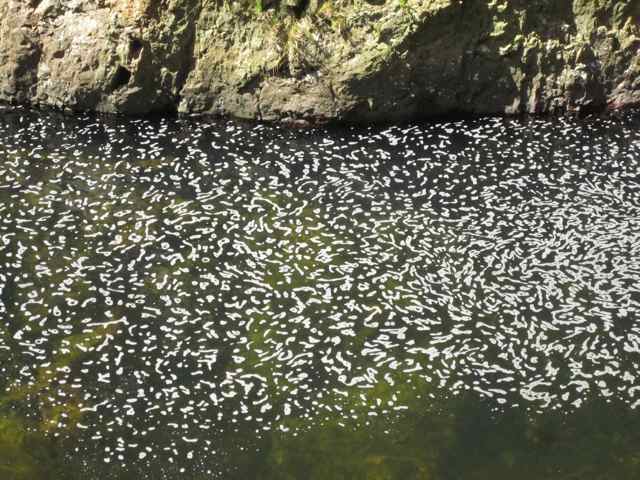
 Froth on the river, possibly caused by pollen as we all got hayfever that day.


 View from the top of Driving Creek Railway, Coromandel Town.
 Driving Creek Railway
Waihi Open Cast Gold Mine

Friday, January 27, 2012

The New and the Old - Macau side trip

I am writing this retrospectively because I didn't have time before I left for a 2 week family holiday in the Coromandel .

Anyway I'd heard a lot about Macau from a friend whose daughter worked there for 6 months as a singing gondolier at the Macau Venetian Hotel. I thought the idea of a singing Gondolier in Macau was so incongruous that I had to see it myself.
It is true! they have made Venice inside the hotel except that everything is way cleaner than in the real Venice and there are lots more fancy shops. I think the sky changes colour from day to night as well, like Venus Fort in Tokyo, very disconcerting.


Check out the blue water in the canals.

The Venetian Hotel/Casino was bad enough but the Galaxy Casino and Hotel was just completely over the top.


The main audience is Mainland Chinese and the shops are very fancy brands. Loved the gold and red tiled floor though.

The other casino that I saw was the Grand Lisboa.

It was like the architects were able to go with their wildest design ideas.

However I was really more interested in the older historic parts of Macau but I don't think I found what I was looking for. Maybe I would need to more time to find the heart of Macau.

 Spiral incense burning slowly
 Older style letterboxes in a crumbling apartment building
 Narrow streets with local shops and apartments, a far cry from the glittering casinos.
 Caged birds taken out for an outing in the park.
 Incense sticks sprouting from a crack in the pavement
 A poster for an exhibition that I would love to have seen, except that I never found the gallery
 Christmas decorations in the older part of Macau
What happens to Christmas decorations on about the 4th of January. Poor old santa...

Friday, January 6, 2012

Hong Kong Shibori Symposium

The first day of the Symposium had registration, an exhibition opening and welcome speeches etc. The second day was pretty much all the talks in 2 concurrent sessions. Luckily we were all issued great big conference proceedings books because we missed a lot. Most speakers tried to do their talks in English but a large part of the audience were Chinese or Japanese. Simultaneous translation was too expensive so there was a little catchup at the end for non-English speakers which must have been very frustrating for them. A few talks were in Mandarin or Japanese and it really made me realise how important it is to have great images on the screen if you don't understand any of the talk. One speaker did his whole talk in Mandarin and his only image was the title of the talk (also in Mandarin) so I still have no idea what he was talking about.

I enjoyed most of the talks but the demonstrations and mini workshops were my favourite. Unfortunately I missed most of the demonstrations as they were the same day as the trunk show.

My favourite was a mini workshop on Lazer engraving on fabric. This was lead by PhD student 'Carson' (Guoxiang Yuan). Carson also won at least 2 prizes in the exhibitions for some amazing work using the laser engraving. Here are some images.
 The jpg image is loaded into the laser computer and re-sized then the piece of clothing or fabric is put onto the bed of the laser 'cubicle?'. In this picture the laser is engraving the jeans across both legs at once. It is removing the colour from the fibres rather than the top layer of fabric.
 Here is an example of a students laser engraved design.
Here I am with Carson in front of his winning work in the Energy Nexus exhibition. The paler areas are made with laser engraving. This method can be used to simulate worn areas on clothing such as jeans much quicker and without use of so much handling, water etc. Look out for Carson I am sure he is going to go far!

Another workshop I really enjoyed was with Michel Garcia. He teaches natural dyeing from a chemist's point of view. He explains why you need certain chemicals and uses non-toxic (often plant based) replacements for most of the dangerous chemicals used previously. I highly recommend his class to anyone who gets a chance to attend one of his classes on indigo or tannins.

I love the idea that I can make an indigo vat with indigo, fructose and lime. Or Indigo, natural henna and lime. Or even indigo, ripe bananas and lime.

Michel Garcia demonstrating how to make two different Indigo vats using henna powder in one and fructose in the other.

 Demonstrating the mixing of mordants which were then printed on white cotton cloth (see below)

Then over dyed with crushed, cooked pomegranate flesh and skins. Each mordant takes up the colour from the pomegranate differently. I will make a link to some websites for Michel Garcia's workshop when our internet is not as slow. I think the kids have pushed the broadband over the limit for today!

I also went to a demonstration/talk by Mr Hiroshi Murase,  about Persimmon juice which is used in Japan as a dye and is called kakishibu. It not only fixes to the fabric with no mordant but can also be used to waterproof things. It reacts to UV so instead of going paler in our high NZ UV, it would go darker. So if anyone in New Zealand - probably in the North - has a  source of green persimmons (maybe they fell off your tree in a storm) please let me know!


Lastly for the day - WOW is going to Hong Kong. A highlights show is going to the Hong Kong Arts festival. The posters were up in MTR stations.